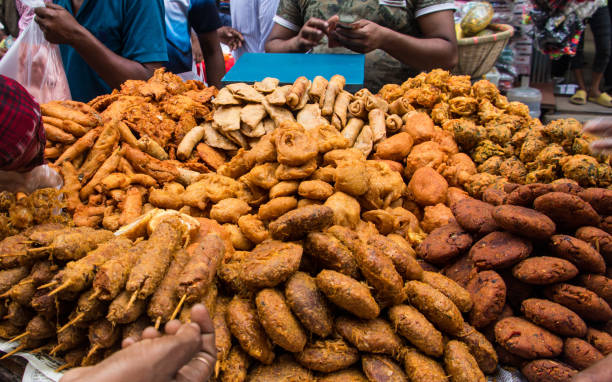
I’ve thought about this way too many times while standing on a dusty roadside, holding a paper plate that’s already going soggy with oil. Street food is one of those things you don’t plan for, it just happens to you. You go out for a walk, maybe to clear your head or buy something boring like vegetables, and suddenly you’re eating fried stuff you didn’t even know you wanted five minutes ago. That’s the addiction part, I guess.
It Hits Before Your Brain Even Decides
One thing I really believe is that street food works faster than your brain. You smell it before you see it. The smoke, the spices, the sizzling sound. It’s like your stomach signs a deal without asking your brain for approval. I once read somewhere that smell can trigger memory more strongly than visuals, and street food uses that trick perfectly. That smell of frying onions or roasted corn instantly reminds people of school days, evening walks, late-night hunger. Your brain connects it to comfort, not calories.
Also, the food is usually right there in front of you, no fancy menu, no waiting time. You see it being made, and somehow that makes it feel more “real” and trustworthy. Even if hygiene is… questionable sometimes. Funny how our standards suddenly drop when hunger kicks in.
Cheap Enough to Feel Harmless
Street food doesn’t feel like a financial decision. That’s a big reason it’s addictive. You’re not doing math in your head like you would at a café. It’s just a small amount, the kind you’d probably waste on something useless online anyway. That’s how it tricks you. One snack becomes two, then maybe a drink, and suddenly you’ve eaten a full meal without realizing it.
There’s also this strange psychology where cheaper food feels less guilty. You think, “It’s fine, it’s only a few bucks.” Even though nutritionally, yeah, not great. But emotionally? Very satisfying. It’s like buying happiness in small coins.
Chaos Is Part of the Flavor
This might sound weird, but I think the environment makes the food taste better. Street food is noisy, crowded, slightly chaotic. Someone’s shouting orders, a bike almost hits your leg, there’s dust in the air. And yet, that makes the moment exciting. Eating in silence at home doesn’t give the same rush.
I’ve noticed people rarely eat street food alone. Even if they arrive alone, they end up talking to someone, or at least watching others eat. There’s a shared experience. Social media has picked up on this too. Half the viral food videos aren’t about taste, they’re about the scene. Big pans, fast hands, dramatic flipping of food. It’s entertaining, almost hypnotic.
Salt, Fat, Spice, Repeat
Let’s be honest for a second. Street food is designed to hit all the pleasure buttons. Salt, fat, spice, sometimes sugar too. That combo is basically the fast track to addiction. Our bodies are wired to love this stuff because, historically, high-calorie food meant survival. Now it just means extra nap time.
There’s also the customization factor. Extra spice, more chutney, less onion, no onion, double butter. You feel in control, like the food is made just for you. That personal touch makes it harder to resist next time. You’re not just eating food, you’re eating “your” version of it.
The Unwritten Rules Everyone Knows
Street food has its own culture, and once you’re part of it, it’s hard to leave. You know which stall is best, which vendor gives extra, which time of day the food tastes better. There’s pride in knowing these things. I’ve seen people argue passionately about the best roadside snack like it’s a serious topic. Maybe it is.
Some lesser-known stuff, vendors often rely on repeat customers more than tourists. So they actually pay attention. A regular might get slightly better portions or faster service. That small recognition feels good. Humans love being remembered, even if it’s just for liking extra spice.
Online Hype Makes It Worse
Instagram and short videos have made street food even more addictive. You see close-ups of melting cheese, crispy edges, steam rising dramatically. Even if you’re not hungry, your brain gets confused. Suddenly you are hungry. Or at least curious.
I’ve fallen for this trap more times than I’d like to admit. Watching food videos late at night should honestly come with a warning label. People comment things like “I need this now” or “worth the stomach ache,” and that kind of online hype normalizes overindulgence. It becomes a shared joke, which makes it feel okay.
A Little Risk Adds Excitement
This part might be controversial, but I think the slight risk factor adds to the addiction. You know it’s not the healthiest. You know your stomach might regret it tomorrow. But that tiny danger makes it thrilling, like breaking a small rule. Obviously, I’m not saying unsafe food is good, but psychologically, forbidden things always taste better.
I remember once eating street food during heavy rain, standing under a plastic sheet, water everywhere. Was it practical? Not at all. Was it memorable? Definitely. That memory alone makes me want to do it again.
Why We Always Come Back
Street food doesn’t pretend to be perfect, and maybe that’s why we love it. It’s messy, inconsistent, sometimes too spicy, sometimes too oily. But it’s real. It fits into real life, real budgets, real cravings. No dress code, no reservations, no judgment.
Addiction might be a strong word, but it feels right. Street food hooks you emotionally, socially, and yeah, chemically too. It’s not just about eating. It’s about moments, habits, and small joys that sneak into your routine when you’re not paying attention.
And honestly, even after knowing all this, I’ll probably still stop at that stall tomorrow. Just one plate. Maybe two.