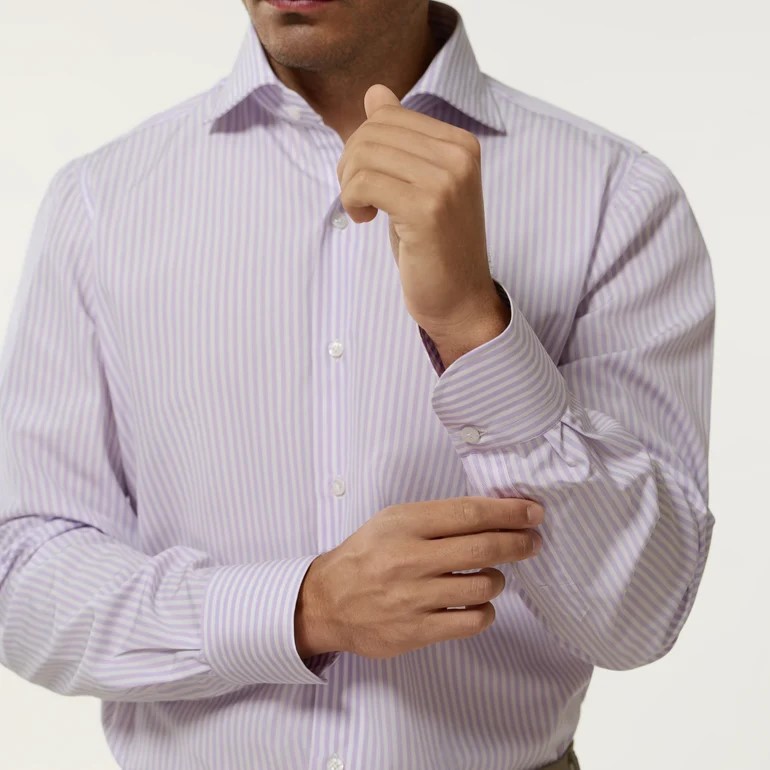
A shirt can look impeccable when freshly pressed and still prove disappointing after several washes. The collar may begin to curl, the seams can develop unwanted puckering, or the fabric may lose the smooth appearance that made it attractive in the first place. These problems are not always apparent when trying on a new garment. Understanding shirt quality requires examining the materials, construction methods, and proportions that determine how the garment behaves during regular use. A well-made shirt should retain its shape, accommodate natural movement, and remain comfortable throughout the day.
Buyers exploring luxury men’s shirts will encounter differences that go well beyond color, pattern, and brand recognition. Two white cotton shirts may have nearly identical appearances but use different yarns, collar constructions, and seam finishes. One may be designed for formal tailoring, while another offers a softer structure better suited to relaxed clothing. The distinction becomes apparent through the way each shirt feels, drapes, and responds to laundering. Knowing which characteristics matter makes it easier to assess whether a higher price reflects meaningful quality.
A shirt also needs to suit the person wearing it. Fine fabric cannot compensate for an uncomfortable collar, and elaborate stitching offers little practical benefit when the shoulders are too narrow. Material, fit, and construction must work together. Their importance becomes clearer when each element is evaluated separately.
Understanding the Fabric Behind a Quality Shirt
Cotton remains a central material in premium shirting because it can be spun and woven into fabrics with very different characteristics. The quality of the finished cloth depends partly on fiber length and consistency, but spinning, weaving, and finishing are equally important. Longer cotton fibers can help produce smoother yarns with fewer protruding fiber ends. However, a label referring to premium cotton does not establish the quality of every subsequent manufacturing stage.
Poplin is a common choice for formal and business shirts. Its relatively smooth surface and fine weave create a clean appearance beneath tailored jackets. Lightweight poplin can feel comfortable in warm conditions, although thinner versions may be more transparent and may require careful ironing. Fabric composition and construction determine how well a particular poplin shirt performs rather than the weave name alone.
Twill offers a different combination of properties. Its diagonal weave structure often produces a supple fabric with an attractive drape. Depending on yarn selection and finishing, twill can feel softer and show wrinkles differently from comparable poplin. It is commonly used for business shirts, particularly when comfort and a slightly more substantial appearance are desirable.
Oxford cloth is generally more textured and is frequently associated with casual and smart-casual clothing. Its characteristic appearance comes from the arrangement of yarns in the weave. Heavier oxford shirts can work well without a jacket, while finer variations may be suitable for less formal business environments. The fabric’s substance and texture should complement the intended collar and overall design.
Linen provides an alternative for warm-weather shirts. It can offer comfortable wear in hot conditions, but its tendency to crease gives it a distinctly relaxed appearance. A linen shirt may be excellent for casual summer clothing while being less suitable for formal occasions requiring a crisp finish. Cotton-linen blends can alter the feel and handling characteristics, although their performance depends on the proportions and construction of the fabric.
Fabric weight deserves consideration alongside weave. A substantial cotton shirt may feel durable but become uncomfortable in warmer conditions. A very lightweight fabric may offer greater comfort yet require more careful handling. The most appropriate choice depends on season, frequency of wear, and whether the shirt will normally be worn beneath a jacket.
Construction Details That Reveal Workmanship
The collar is one of the most technically important parts of a shirt. Its construction influences how the garment frames the face, sits beneath a jacket, and behaves after laundering. Collar shape is partly a matter of personal preference, but the internal structure determines whether it maintains the intended appearance. Some collars use fused interlining, while others rely on different construction methods to create a softer finish.
A firm collar is not necessarily better than a soft one. Formal business shirts often benefit from a collar that holds its shape beneath a jacket and tie. Casual shirts may look more natural with a softer collar that follows the fabric’s movement. The choice should reflect how the shirt will be worn rather than an assumption that greater stiffness indicates higher quality.
Buttonholes and button attachment provide further evidence of construction standards. Buttonholes should be neatly finished, with stitching that secures the edges without damaging the surrounding fabric. Buttons need to be attached firmly enough to withstand repeated fastening and laundering. Decorative materials can add visual appeal, but their usefulness depends on durability and appropriate attachment.
Seam construction also matters. The side seams and armholes experience repeated movement, so the stitching must remain secure without creating unnecessary bulk. Some premium shirts use narrow, carefully finished seams that produce a clean interior. Others employ different methods suited to their fabrics and production processes. The objective is strength, comfort, and a tidy appearance rather than adherence to one construction technique.
Pattern matching can indicate the care taken during cutting. On striped or checked shirts, alignment at the front placket and other prominent areas contributes to a balanced appearance. Exact matching at every seam is not always practical, particularly where curved pieces meet. Nevertheless, conspicuous misalignment in highly visible areas may detract from an otherwise refined garment.
When examining a shirt before purchase, several details deserve closer inspection.
- Collar construction. The collar should maintain its intended shape and sit comfortably around the neck.
- Seam finishing. Stitching should be secure, even, and free from excessive puckering.
- Button attachment. Buttons should be firmly secured without pulling the fabric out of shape.
- Cuff construction. Cuffs should close comfortably and retain their form after repeated use.
- Pattern alignment. Stripes and checks should be reasonably coordinated across prominent sections.
- Fabric consistency. The material should have an even appearance without obvious weaving defects or unexplained variations.
These observations are useful when considered together. A perfectly finished cuff cannot compensate for unsuitable fabric, just as an expensive material does not excuse poorly executed seams.
Why Proper Fit Changes Everything
A shirt should follow the body’s proportions without restricting movement. This sounds straightforward, yet many fit problems arise because shoppers concentrate on chest size while overlooking shoulders, collar circumference, sleeve length, and torso shape. A shirt that fits correctly across the chest may still be uncomfortable around the neck or excessively tight when reaching forward.
Shoulder fit is particularly important. The shoulder seam should generally sit near the natural shoulder, allowing for the cut and intended style of the garment. Excessively narrow shoulders can restrict arm movement and create tension across the upper back. A shirt with overly broad shoulders may develop folds that make the garment appear larger than intended.
Collar size should be assessed independently of overall shirt size. When fastened, the collar needs enough room to remain comfortable without creating an excessively loose appearance. A collar that feels restrictive while standing is unlikely to become more comfortable during a long working day. Men who frequently wear ties should check the collar in the fully buttoned position rather than judging only how the shirt looks when open.
Sleeve length affects both appearance and comfort. Sleeves that are too short may pull when the arms extend, while excessive length creates bunching around the cuffs. The armhole and upper sleeve also influence mobility. An overly low armhole can cause the shirt body to rise noticeably when the arms are lifted, even when the garment feels loose elsewhere.
The torso requires a balance between shape and freedom of movement. A close-fitting shirt may look neat beneath a jacket but become uncomfortable when sitting. Excessive fabric around the waist, meanwhile, can produce unnecessary bulk when tucked into trousers. Different cuts address these preferences through changes in chest allowance, waist suppression, and overall length.
Trying on a shirt should include ordinary movements. Sitting, reaching forward, and raising the arms moderately can reveal fit problems that are difficult to notice in a stationary position. The correct fit is not necessarily the closest possible fit. It is one that maintains an appropriate silhouette while allowing the wearer to move comfortably.
Choosing Shirts for Different Occasions
Formal business clothing generally benefits from shirts with restrained colors, smooth fabrics, and collars designed to work beneath tailored jackets. White and pale blue remain useful because they coordinate with a wide variety of suit fabrics. Subtle stripes can provide variation without distracting from the overall outfit. The appropriate collar shape depends on the wearer’s proportions, preferred tie knots, and jacket design.
For business-casual clothing, a broader range of fabrics and finishes becomes possible. Oxford shirts, softer twills, and selected textured cotton fabrics can work well with unstructured jackets or fine knitwear. An open collar may create a relaxed appearance, provided that it sits naturally rather than collapsing awkwardly. The fabric’s texture should remain compatible with the other garments in the outfit.
Casual shirts offer greater freedom in construction and styling. Linen, brushed cotton, and heavier oxford fabrics may be comfortable choices depending on the season. Button-down collars, relaxed cuts, and more substantial textures can contribute to an informal appearance. Such details should be assessed according to their intended function rather than compared directly with the standards of formal dress shirts.
Color and pattern also influence versatility. A strongly patterned shirt may be attractive on its own but difficult to combine with certain jackets. Small checks and restrained stripes are often easier to integrate into an established wardrobe. However, compatibility depends on pattern scale, color contrast, and the texture of surrounding garments.
A practical wardrobe does not require a large number of shirts in every possible style. Men who wear tailored clothing regularly may benefit from several dependable business shirts, while those with more relaxed routines may use casual designs more frequently. The objective is to select shirts that suit actual activities and work with existing trousers, jackets, and knitwear.
Care and Maintenance Affect Long-Term Quality
Even a well-constructed shirt can deteriorate prematurely when exposed to unsuitable washing and drying conditions. Cotton fibers tolerate regular laundering, but shrinkage, color fading, and fabric distortion can occur depending on the material and treatment. Care instructions should therefore be checked before purchase, particularly for shirts made from delicate fabrics or unusual blends.
Washing temperature is an important consideration. Excessive heat can contribute to shrinkage and may affect certain finishes or internal components. Aggressive spinning and overcrowded washing machines can also increase creasing and place unnecessary strain on seams. Following the manufacturer’s instructions and choosing an appropriate washing program helps preserve the garment.
Collars and cuffs often show wear earlier than the rest of the shirt. These areas experience repeated contact with skin and frequent movement, making them vulnerable to discoloration and abrasion. Prompt attention to stains and suitable laundering can help maintain their appearance. Excessively vigorous scrubbing may damage the fabric rather than restore it.
Ironing requires similar care. Different fabrics respond differently to heat and moisture, and overly high temperatures can create unwanted shine or damage particular fibers. A slightly damp cotton shirt is often easier to press than one that has dried with deep creases. Steam can assist with wrinkle removal, provided that the garment’s care instructions permit its use.
Storage also influences appearance. Hanging shirts on appropriately shaped hangers can help prevent unnecessary folding and creasing. However, the wardrobe should provide enough space to avoid compressing collars and sleeves. Shirts intended for occasional formal use may require less frequent laundering, but they should still be stored clean and dry.
Minor repairs can extend useful life. Replacing a loose button or securing a small section of stitching is generally straightforward. Extensive wear around collars, cuffs, or the fabric itself is more difficult to address. Recognizing the difference between repairable damage and material deterioration helps determine when a shirt should be maintained or replaced.
Evaluating the Real Value of a Premium Shirt
A higher purchase price may reflect expensive cotton, specialized manufacturing, detailed finishing, or brand positioning. These factors do not always contribute equally to comfort and longevity. A shirt should therefore be evaluated according to how well its characteristics match the wearer’s needs.
Cost per wear offers one useful perspective. A shirt purchased for €250 and worn 100 times has a purchase cost of €2.50 per wear, excluding cleaning and maintenance. Another costing €100 but worn only ten times reaches €10 per wear. These calculations do not prove that the more expensive garment is better, but they illustrate why frequency of use matters.
Comfort is equally important. A shirt with exceptional fabric and decorative details provides limited value when its collar is uncomfortable or its proportions are unsuitable. A less elaborate garment that fits properly and works with several outfits may prove more satisfying. The practical advantages of quality become meaningful through regular use.
Long-term performance is also influenced by rotation and maintenance. Shirts worn frequently may benefit from being alternated rather than subjected to continuous use and repeated laundering. Choosing several well-fitting garments appropriate for regular activities can be more effective than purchasing a larger collection of shirts that are rarely worn.
The strongest purchasing decisions combine material quality, workmanship, fit, and suitability for the intended wardrobe. Brand reputation may provide an initial reason to examine a shirt, but the individual garment must still justify its price.
Recognizing Quality Without Relying on the Label
Learning to evaluate shirts becomes easier with experience. Comparing different cotton weaves, examining seam finishes, and observing how collars behave after laundering can reveal characteristics that are difficult to appreciate from product photographs. The process does not require specialist equipment. Careful observation and a clear understanding of personal requirements provide a useful starting point.
It is also important to distinguish genuine quality from unnecessary complexity. Additional stitching, unusual buttons, or elaborate packaging do not automatically improve a shirt. Construction details should contribute to comfort, durability, appearance, or ease of maintenance. Features that serve no practical or meaningful aesthetic purpose are not reliable indicators of superior workmanship.
A high-quality shirt should feel comfortable from the first wear, maintain its intended proportions, and respond predictably to appropriate care. Its fabric should suit the season and occasion, while its construction should support repeated use without avoidable deterioration. These qualities are more valuable than a recognizable label alone.
The best shirt is ultimately one that performs its function so naturally that the wearer rarely needs to think about it. The collar remains comfortable, the sleeves move freely, and the fabric looks appropriate throughout the day. When material, construction, and fit work together, a shirt becomes a dependable part of the wardrobe rather than an occasional demonstration of luxury.